
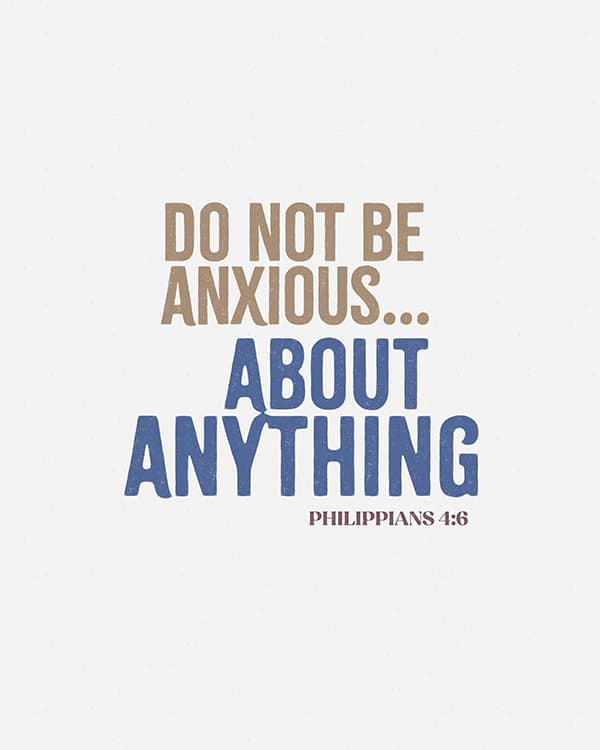
Do not be anxious about anything, but in every situation, by prayer and petition, with thanksgiving, present your requests to God. And the peace of God, which transcends all understanding, will guard your hearts and your minds in Christ Jesus. – Philippians 4:6-7
What is it that keeps you up at night? Maybe it is your health, or the weight of financial pressure, or a relationship that feels like it is fraying at the edges. Whatever it is, worry has a way of moving in quietly and taking over. But in Philippians 4:6-7, the apostle Paul offers something remarkable: not just a command to stop worrying, but a warm and tender invitation to bring every anxious thought before God and receive, in return, a peace that defies human explanation.
What Does Philippians 4:6-7 Teach Us About Anxiety and Prayer?
Paul does not simply tell us to stop worrying and leave it at that. He points us toward something better. Every situation, he says, every circumstance no matter how heavy or how small, is an opportunity for prayer. We can come with our petitions, with our honest needs, and with thanksgiving woven into our asking. This is not a formula for getting what we want. It is a picture of a life lived in constant, trusting conversation with a Father who genuinely wants to hear from us.
There is a tenderness in the way God approaches our worry. A good shepherd does not simply drive the sheep forward and expect them to keep up. He walks with them, knows them by name, and leads them to still waters. In the same way, God does not stand at a distance and say, “Stop being afraid.” He draws close and says, “Tell me what you need. Let me carry this with you.”
How Can We Experience the Peace of God That Passes Understanding?
The peace described in verse seven is not something we manufacture through positive thinking or sheer willpower. It is a gift, and it comes to us as we bring our worries honestly before God. The word Paul uses suggests that this peace actively stands watch over our hearts and minds, like a sentinel at the gate. It guards us from the spiral of fear that anxious thoughts so often set in motion.
This is why thanksgiving matters so much in the practice of prayer. Gratitude shifts our gaze. It reminds us of what God has already done, and that remembrance becomes the foundation for trusting Him with what we cannot yet see. When we pray with a thankful heart, we are not pretending everything is fine. We are declaring that God is good, and that His goodness does not change with our circumstances.
How Can We Apply Philippians 4:6-7 to Our Daily Lives?
Living out this passage is less about achieving a permanent state of calm and more about developing the daily habit of turning to God first. When anxiety rises, rather than ruminating or reaching for distraction, we bring it to Him. We name it. We ask for help. We thank Him for His faithfulness. And we trust that He is actively at work, whether that means changing our situation or changing us from the inside out.
The peace of God is not the absence of difficulty. It is a deep and settled confidence that the One who holds all things is holding us too. We can release our grip on our worries because they were never ours to carry alone. He is already in the middle of it, tending to every detail with a care that exceeds anything we could manage on our own.