
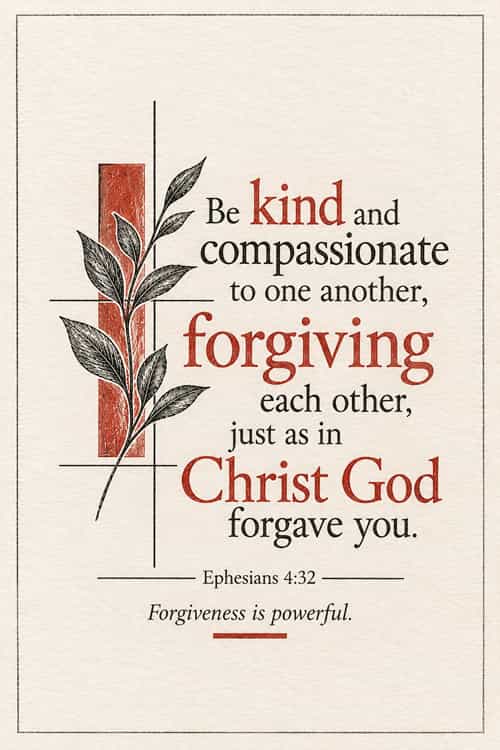
Be kind and compassionate to one another, forgiving each other, just as in Christ God forgave you. – Ephesians 4:32
Paul places three closely related qualities at the heart of life together in Christ: kindness, compassion, and forgiveness. What makes this instruction especially meaningful is the reason he gives for it. We are to forgive one another just as God forgave us in Christ. The way God has treated us becomes the measure of how we are to treat the people around us.
These words appear near the end of Ephesians 4, where Paul describes the difference Christ makes in the way believers live. He has been speaking about putting away falsehood, controlling anger, using words to build others up, and turning away from bitterness and malice. His concern reaches beyond individual behavior. He is describing a community whose life together should bear the character of the Lord it follows.
That makes kindness more significant than simple politeness. It is easy to be pleasant when a relationship is comfortable or when someone treats us well. Christian kindness is tested when patience wears thin, when someone disappoints us, or when another person’s needs interrupt our own plans. Compassion helps us look beyond the immediate frustration and remember that the person in front of us is someone who needs grace just as we do.
The example that makes forgiveness possible
Forgiveness is perhaps the most demanding part of Paul’s instruction. Kindness and compassion may come more naturally when affection is already present, but forgiveness often involves something painful. Someone has said or done something that has wounded us, and the desire to hold on to that hurt can be strong. Paul does not pretend that these difficulties are insignificant. He points instead to something greater than the offense: the forgiveness God has extended to us through Christ.
There is a humility in remembering this. We can become so focused on what another person owes us that we lose sight of how much we ourselves have received. God’s forgiveness was not a reward for getting everything right. It was an expression of His grace. We come to Him dependent on that grace, much like sheep who need the care and guidance of their shepherd. Remembering our own dependence can soften the way we regard someone who has wronged us.
This does not mean that forgiveness requires us to deny the seriousness of an offense, excuse harmful behavior, or pretend that trust has not been broken. Reconciliation may take time, and rebuilding a damaged relationship may require genuine change. Forgiveness, however, keeps bitterness from becoming the defining force in our hearts. We can release our claim to personal retaliation while leaving justice and the outcome in God’s hands.
A different way to live together
Paul’s instruction is especially important because we do not always have the freedom to choose the people with whom we share our lives. Families, churches, and Christian communities bring together people with different personalities, expectations, weaknesses, and ways of seeing the world. Even sincere believers will sometimes disappoint one another. Without kindness and compassion, those differences can become sources of resentment and division.
But imagine the difference when people are willing to approach one another with the grace they have received from God. A harsh response can give way to a patient word. Someone who feels overlooked may find that another person takes time to listen. An old offense need not be brought into every new disagreement. These choices may seem small, but they shape the character of a community over time.
There is something deeply practical about Paul’s closing words. He does not ask believers to manufacture a feeling of affection for everyone around them. He reminds them of what God has already done. His forgiveness gives us a reason to treat others differently, even when doing so is difficult. As we follow our Shepherd, we learn to extend the same kind of care and grace that we continually need ourselves. That is how the love of Christ becomes visible in the way we live together.