
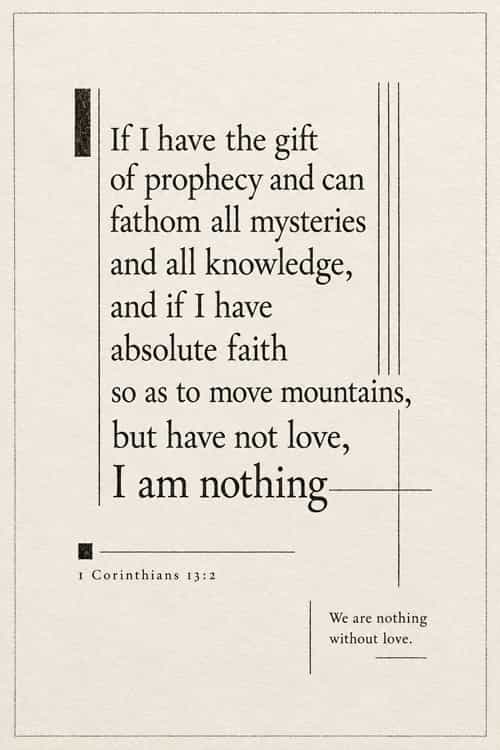
If I have the gift of prophecy and can fathom all mysteries and all knowledge, and if I have absolute faith so as to move mountains, but have not love, I am nothing. – 1 Corinthians 13:2
Paul describes a kind of faith that can move mountains and a depth of understanding that reaches into the greatest mysteries of God. Yet he places a startling condition at the heart of it all: without love, even these extraordinary gifts amount to nothing. We may long to grow in faith and wisdom, but Paul directs our attention to something more fundamental than either.
When impressive gifts are not enough
It is natural to admire people who know the Bible well, understand difficult spiritual truths, or demonstrate remarkable faith in God. These gifts can strengthen the church and encourage others to trust the Lord. Paul is not dismissing their value. He is showing us that even the greatest gifts cannot take the place of love.
We can know a great deal about God without allowing that knowledge to shape the way we treat people. We can speak confidently about faith while overlooking someone who needs patience or kindness. Our understanding may be sound, and our convictions may be strong, but something essential is missing if the love of Christ does not find expression in our lives.
That is a sobering thought, especially when we tend to measure spiritual growth by what we know or what we can accomplish. Paul asks us to look beyond appearances and consider what is happening in our hearts.
Love gives faith its proper purpose
Faith looks to God and trusts Him to do what we cannot do for ourselves. Love shapes the way that faith touches the lives of others. Without love, even great faith can become something we admire in ourselves rather than a means of serving God and caring for our neighbors.
Jesus never separated love for God from love for people. His life showed the humility and compassion of the Good Shepherd, who came not to draw attention to Himself but to seek and save the lost. His strength was never detached from His love.
We follow Him most faithfully when our growing knowledge of Scripture makes us more patient, our confidence in God’s promises makes us more willing to serve, and our faith gives us courage to care for others even when doing so costs us something.
Love does not make faith less important. It brings our faith into the kind of life God intends for us.
The quiet evidence of a heart changed by God
Love is not always demonstrated through extraordinary acts. Often, it appears in ordinary moments that no one else notices. It may mean listening instead of insisting on having the last word, responding gently when pride urges us to defend ourselves, or choosing to forgive when resentment would be easier.
These responses may not seem as impressive as moving mountains, but they reveal something important about our relationship with God. They show that His grace is doing more than filling our minds with truth. It is changing the way we see and treat the people around us.
This kind of love requires humility. We must be willing to let God examine our motives, not just our actions. Are we using what we know to help others, or to make ourselves appear wise? Does our faith lead us to serve, or do we quietly expect others to notice how strong our faith is?
We do not need to answer these questions with discouragement. They are invitations to return to the Lord and allow His love to shape us more deeply.
Let love lead the way
God is not asking us to choose between faith, wisdom, and love. He calls us to grow in faith and understanding while allowing love to guide how we use them. We can ask Him to deepen our trust, teach us His Word, and make us more attentive to the needs of those He places in our lives.
The next time you have an opportunity to demonstrate what you know or how strongly you believe, consider how love might shape your response. A gentle word, an act of service, or a willingness to put another person’s needs ahead of your own may say more about your faith than a thousand impressive words.
Paul’s words bring us back to what matters most. Spiritual gifts have value, but they are not the measure of a life that pleases God. The greatest knowledge and the strongest faith find their proper place when they are guided by love. May our lives reflect not simply how much we know about God, but how faithfully His love is being shared through us.