
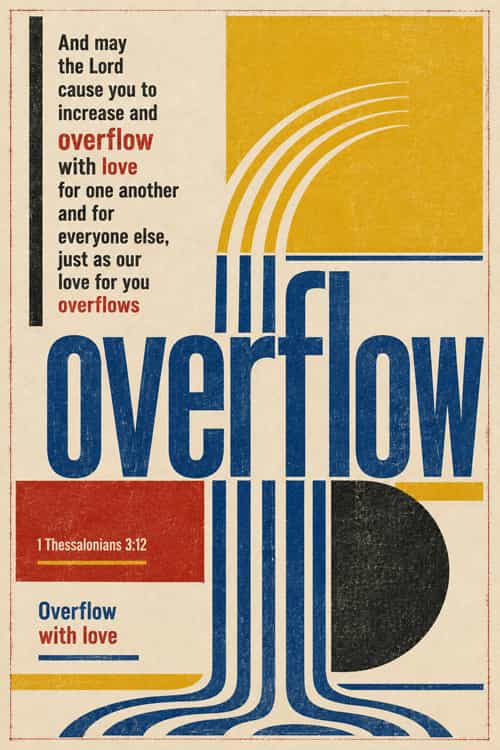
And may the Lord cause you to increase and overflow with love for one another and for everyone else, just as our love for you overflows – 1 Thessalonians 3:12
Can someone really learn to love difficult people? Most of us know how easily patience wears thin or how quickly disappointment can cool our affection for someone else. Paul’s prayer in 1 Thessalonians 3:12 reminds us that genuine Christian love is not something we manufacture by trying harder. It is something the Lord Himself causes to grow. That small detail changes the whole passage. Love begins with God before it ever reaches another person.
Why does Paul pray for love instead of simply commanding it?
It is striking that Paul asks the Lord to make these believers increase and overflow with love. Elsewhere in Scripture we are certainly commanded to love one another, yet here Paul prays because he knows that love is ultimately God’s work within us.
That is both humbling and encouraging. We often notice where our love falls short. We may find it easy to care for family or close friends while struggling with those who have wounded us, misunderstood us, or simply seem impossible to please. Paul does not ignore those realities. Instead, he points us toward the One who can reshape a heart from the inside.
The picture of overflowing is especially beautiful. An overflowing cup does not hold back what it has received. It spills over. God’s love is never intended to stop with us. As the Good Shepherd cares for His sheep with patient kindness, He teaches His people to extend that same care to one another.
What does it mean to overflow with love?
Overflowing suggests abundance rather than scarcity. Sometimes we approach relationships as though love were a limited resource that will eventually run out. We ration forgiveness. We measure kindness. We become cautious with grace.
Yet the love that comes from God is different because its source is different. The Father did not love us after we earned His favor. He loved us while we were still sinners, sending His Son to bear our guilt and bring us into His family. Every act of forgiveness we receive reminds us that we live each day beneath a love that has already overcome our greatest need.
When that truth settles into our hearts, our relationships begin to change. Not all at once, and rarely without setbacks, but they do change. We become slower to assume the worst, quicker to listen, and more willing to show mercy because we remember how much mercy has been shown to us.
How can we grow in this kind of love today?
Perhaps the first step is admitting that we cannot produce this love on our own. There is a quiet honesty in Paul’s prayer. He does not tell believers to create overflowing love by determination alone. He asks the Lord to accomplish what only He can do.
That means we can bring our struggles to Him without pretending otherwise. We can ask Him to soften resentment, replace impatience with compassion, and help us see people through His eyes. Those prayers may feel ordinary, but God often answers them in ordinary moments: a conversation that requires humility, an opportunity to forgive, a chance to encourage someone who expected criticism instead.
And over time, we may notice something surprising. The Lord has been answering our prayers, not by changing everyone around us first, but by quietly changing us. His love continues to fill our hearts until there is enough to share with family, friends, neighbors, and even those who are difficult to love.
That is Paul’s prayer for the Thessalonian believers, and it remains a fitting prayer for us today. May the Lord continue to increase our love until it overflows, pointing others not to our own goodness, but to the limitless love of Christ.